Rainwater Tank Installation in Beachmere
Big yards and steady rain make rainwater tank installation in Beachmere a smart upgrade for this town. Local records put yearly rainfall near 1216 mm, and the roofs on the low-density houses catch their share. The rural-residential blocks along the coast have the room a decent tank needs.
If we're late, $100 comes off your bill

- Licensed and InsuredEvery job done by a licensed plumber. QBCC No: 15024607
- Fixed Quote FirstFlat-rate pricing, agreed before any work starts
- Lifetime Labour WarrantyBacked by our Fix-It-or-It's-Free guarantee (T&Cs apply)
- $0 Call-Out FeesNo extra charge for nights, weekends or public holidays
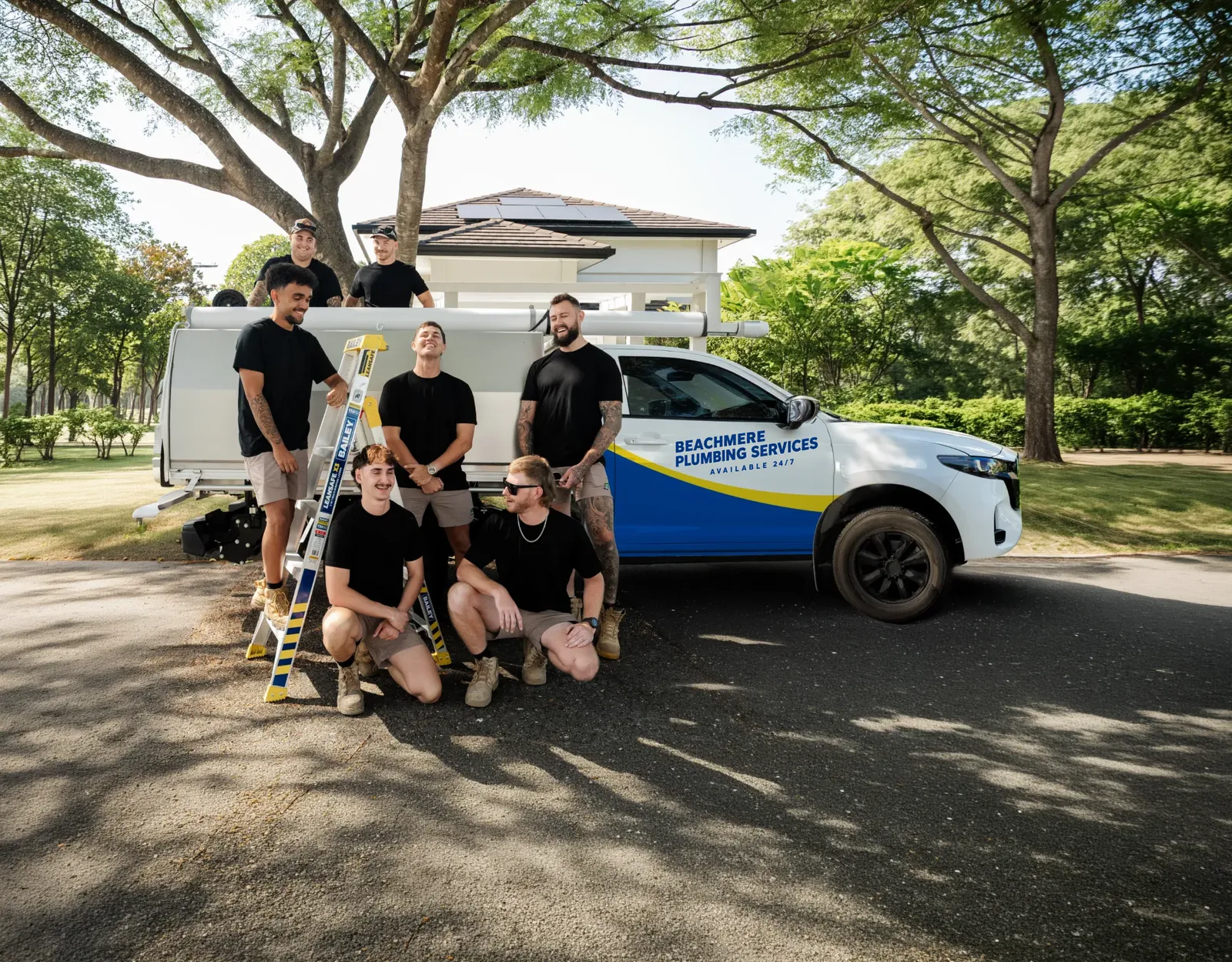
Beachmere Plumbing Services plans the whole run with you: which fixtures drink tank water, where the pipe goes, and what the council needs to see. A licensed plumber does every part of the connection, from the diverter to the last garden tap.

How a Tank Is Plumbed Into the House
Roof water travels one set route: via a first flush diverter, then a screened inlet, into storage, then out along a plumbed line to cisterns, laundry and garden taps. A licensed plumber signs off on the connection, because Queensland classes a tank feeding household fixtures as regulated work.
Each part of that route has a job:
First flush diverter
catches the first wash off the roof, so grit and leaf litter stay out of your storage.
Screens
each opening on the tank, including the overflow, carries metal gauze such as brass or stainless, with openings no wider than 1 mm.
The outlet run
new pipe from the tank to the cisterns, the washing machine cold tap and the garden taps.
Tank position, fixture choice and pipe length all shape the quote, and we settle all three on site. Town-side supply pipe problems are separate work, covered on our water pipe repairs page.
Tank Water and the Drinking Water Rule
Roof-harvested rainwater has three approved uses: flushing toilets, running the laundry's cold tap, and watering outdoors. Queensland's plumbing guidance treats those three as low-risk, so no extra treatment is needed.
Drinking, cooking and personal hygiene sit outside that list. Mains supply is the safer and more reliable choice for those, and tank water only steps in where a property has no town water at all.
One billing trap deserves a name. An auto top-up from the mains can hide a faulty solenoid or worn internal parts, and losses on a tank refill line sit outside Unitywater's concealed leak bill adjustment. We trace faults like that; the leak detection page explains how.
Filtered drinking water at the kitchen sink is a separate job, and the water filters page covers it.
Where a Tank Can Go and Who Approves It
The council holds the pen here: Moreton Bay handles tanks under building and plumbing approvals, so a call to the council comes first. The council can also set position rules, and in some areas a minimum distance from the side boundary applies.
A few requirements ride along with the approvals:
- mosquito-proof screens on every opening
- stormwater connections arranged the way the council wants them
- a first flush diverter fitted where the rules require one
The bigger rural-residential lots along this coast make placement simple. Those blocks run septic trenches in sand that stays wet through the wet season, so keeping tank plumbing clear of that ground is part of our plan for your property.
Keeping a Tank Mosquito-Proof and Clean
Three intervals run the upkeep: the diverter every 3 months, screens and access points every 6 months, and sediment checks every two or three years. A tank where mosquitoes can breed attracts fines up to 3 penalty units, issued on the spot.
What each check involves:
Every 3 months
open and clean the first flush device, with an extra clean-out after decent rain.
Every 6 months
look over the gauze and flap valves for damage, and fix tears at once. Clear leaf build-up from the roof, trim overhanging branches, and shut any gaps where animals, birds or insects get in.
Every two or three years
check inside for sediment. If sludge covers the base, draw the sludge out with a siphon hose or drain the tank and start clean.
Salt breeze is hard on gauze and flap valves, so the 6-monthly inspection earns a fixed spot on the calendar from the foreshore to the houses near the bowls club on Progress Avenue. A plumbing health check can fold the tank inspection in with the rest of the house.
How We Install Your Tank Plumbing
- 1

Call or message us
Ring (07) 3523 7172 or use the form and describe what's going on in Beachmere. A few details up front mean the right gear comes on the first trip.
- 2

We walk the yard with you
We check where the tank stands, which fixtures run on tank water, and the shortest sound route for the new pipe. You hear the council requirements and the coastal-rated fixings before we quote.
- 3

Fixed quote, then the work
We give you a fixed quote before any work starts. It's flat-rate pricing with no hidden fees, and we only start once you approve it.
- 4

Settle up your way
Card and EFTPOS payment on site when the job's finished, or Fix now, pay later if that suits you better.
Plumbing job in Beachmere?
$0 call-out fees, available 24/7, and same-day where we can.
Questions From Tank Owners
Call (07) 3523 7172Does my tank need council approval in Beachmere?
Yes, expect the council to be involved. Tanks here fall under building and plumbing approvals, and position rules can include a side-boundary distance in some areas. A call to the council before you buy settles it.
Can I plumb tank water to my washing machine myself?
No, that connection counts as regulated work that only a licensed plumber may do in Queensland. We handle the pipe run, the commissioning checks and any paperwork the rules require.
Is a first flush diverter compulsory here?
Yes, where the Moreton Bay requirements apply. A diverter sits on the list of mandatory items that may apply to a tank, and it keeps the first wash of roof water out of your storage regardless.
What tank maintenance does a Beachmere home need each year?
Clean the diverter every 3 months, check the gauze, flap valves, roof and animal access every 6 months, and look for sludge every two or three years. The 6-monthly check also catches salt-air wear on the fittings.
Can I drink the water from my tank?
No, not while mains water reaches your home. Drinking, cooking and washing stay on town supply, which is the safer choice, and tank water is reserved for properties with no town supply at all.

Call Us About Your TankWe'll call you back.
Ring (07) 3523 7172 and tell us what's wrong. You get $0 call-out fees, a fixed quote before any work starts and same-day where we can, 7 days a week.
To claim your $0 call-out fee, call (07) 3523 7172 today.